
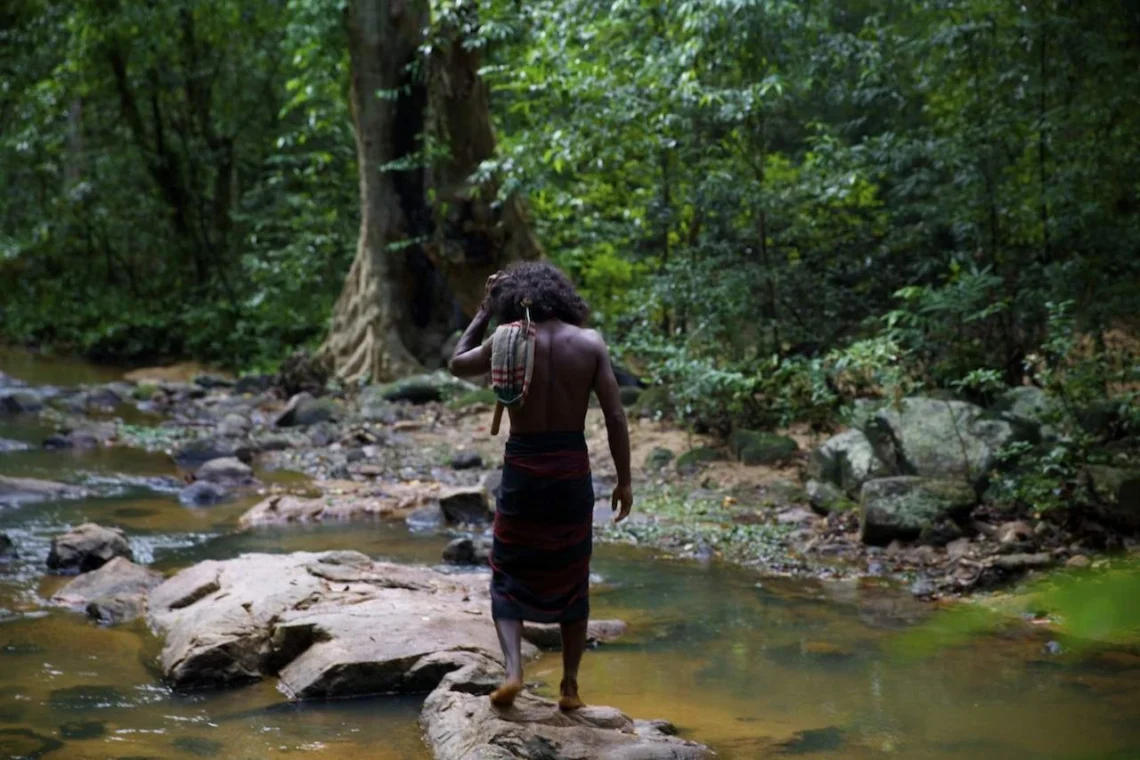
The Vedda people, often referred to as Sri Lanka’s aboriginals, have a history dating back to at least 10,000 BC, with archaeological evidence suggesting Neolithic origins. In the Gal Oya region, they were historically cave-dwellers, living in forests and relying on hunting, gathering, and fishing. Their traditional lifestyle included using medicinal plants and exchanging honey with locals for tools and cloth. The Mahavamsa, a historical chronicle, mentions them as descendants of Queen Kuveni and King Vijaya, dating their presence to the 5th century BCE.
The Gal Oya area’s development, particularly through the Gal Oya project in the late 1940s and 1950s, significantly impacted Vedda communities. Many were displaced or modernized, with some adopting Sinhala and Tamil languages and customs. Today, the remaining Vedda population, estimated at around 2,000 with fewer than 200 still living traditionally, is concentrated in areas like Dambana, close to Gal Oya Efforts to preserve their culture include guided walks with Vedda chiefs, offering insights into their use of medicinal plants, ancient hunting grounds, and cave dwellings. These interactions highlight the fragile and rapidly disappearing nature of their traditions, with modern developments like TV and internet contributing to cultural loss.
Leave a Reply